- 16th July, 2026
- By Geoff Gander
The Role of Technology in Modern Oil Exploration and Production Companies
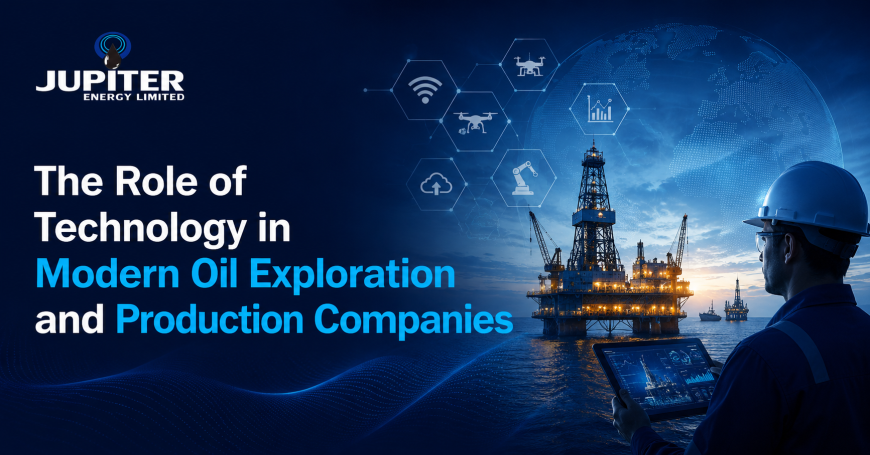
The oil and gas sector has changed more in the last two decades than in the previous fifty years combined. Where exploration once relied on manual surveys, physical core samples, and slow, paper-heavy decision-making, today's operations are built around data, automation, and connected systems.
Traditional approaches to oil exploration carried significant risk. Drilling decisions were often made with limited visibility into subsurface conditions, while production relied heavily on manual monitoring and reactive maintenance. This often resulted in higher operational costs, lower efficiency, and increased uncertainty when identifying commercially viable reserves.
Today, modern oil exploration and production companies operate in a very different environment, one shaped by mounting pressure to reduce costs, improve workplace safety, meet sustainability targets, and respond quickly to volatile global demand. Technology has become the backbone of how a modern oil exploration and production company competes, innovates, and grows. From advanced seismic imaging and artificial intelligence to automation, predictive analytics, and real-time monitoring, digital technologies are transforming every stage of the value chain. Companies embracing these innovations are not only improving operational performance but also positioning themselves for long-term resilience in an increasingly competitive market.
Digital Transformation Reshaping the Oil Exploration Industry
The shift from manual processes to integrated digital ecosystems is arguably the single biggest change in how energy companies operate. Cloud-based platforms now enable teams across geology, engineering, operations, finance, and executive leadership to collaborate using centralised data rather than relying on siloed spreadsheets, disconnected reports, or fragmented software systems.
This transformation supports faster, more informed decision-making in a sector where delays can significantly affect project costs and production schedules. Geological surveys, drilling data, financial models, production reports, and maintenance records can now be consolidated into a single digital environment, ensuring that accurate information is available to the right people at the right time.
Digital transformation also improves transparency across projects, making it easier to track budgets, monitor asset performance, and identify operational bottlenecks before they become costly issues. By reducing manual data entry and streamlining communication between departments, organisations can improve productivity while minimising the risk of human error.
- Faster operations with less time lost to manual data reconciliation.
- Reduced inefficiencies across exploration, drilling, and production workflows.
- Improved ROI for investors through greater visibility into project performance, operational costs, and financial outcomes.
- Better collaboration across geographically dispersed teams and project sites.
Smarter Oil Exploration with Advanced Technologies
Seismic imaging has evolved dramatically from traditional 2D surveys. Modern 3D and 4D seismic technologies provide geologists with far more detailed and dynamic visualisations of underground rock formations, enabling them to understand not only where potential reservoirs exist but also how they change over time during extraction.
Artificial intelligence and advanced data analytics are now layered onto this imaging capability to further improve exploration accuracy. Machine learning algorithms can process enormous volumes of geological, seismic, and historical drilling data much faster than traditional manual interpretation, helping identify viable reserves while reducing uncertainty.
Rather than relying solely on experience and interpretation, exploration teams can now use predictive models to evaluate drilling prospects, estimate reservoir quality, and assess commercial viability before significant capital is committed.
This translates into several important benefits for an oil exploration company:
- Higher drilling success rates because exploration decisions are supported by richer and more accurate datasets.
- Better capital allocation by reducing investment in low-probability drilling locations.
- Faster evaluation of exploration opportunities across multiple regions.
- Improved confidence when making high-value investment decisions.
Automation and AI in Production Operations
Once commercially viable reserves have been identified, automation plays a central role in improving production efficiency. Automated drilling systems and intelligent rigs can respond in real time to changing subsurface conditions, optimising drilling performance while reducing the need for continuous manual intervention.
Artificial intelligence extends these capabilities by continuously analysing production data from wells, pipelines, and processing facilities. AI-powered optimisation systems identify patterns that would be difficult for human operators to detect, enabling production teams to maximise output while minimising energy consumption and operational waste.
Predictive maintenance is another major advancement. Sensors installed on critical equipment monitor vibration, pressure, temperature, and other performance indicators. AI analyses this information to detect early signs of equipment degradation, allowing maintenance teams to address issues before failures occur.
Instead of relying on reactive repairs after equipment breaks down, operators can schedule maintenance during planned shutdowns, reducing both downtime and repair costs.
- Lower operating costs through fewer equipment failures and reduced maintenance expenses.
- Improved safety by limiting worker exposure to hazardous equipment and environments.
- Greater operational efficiency across drilling, extraction, transportation, and processing.
- Higher equipment reliability and longer asset lifecycles.
IoT and Real-Time Monitoring Across Oil Fields
The Internet of Things (IoT) has become a cornerstone of modern oil field operations. Thousands of connected sensors continuously monitor pressure, temperature, vibration, flow rates, corrosion levels, and equipment performance across production facilities.
This constant stream of operational data enables engineers and operations teams to monitor assets remotely rather than relying solely on scheduled inspections or manual site visits. Real-time visibility allows companies to detect abnormalities almost immediately, enabling faster response times and reducing the likelihood of major operational disruptions.
Remote monitoring is particularly valuable for companies operating multiple assets across large geographic regions or offshore locations, where physical inspections are expensive and time-consuming.
- Reduced operational and safety risks through continuous monitoring.
- Increased production efficiency with faster fault detection and reduced downtime.
- Better resource planning through real-time operational insights.
- Improved decision-making supported by accurate live data.
Sustainability and Environmental Technologies
Environmental, social, and governance (ESG) considerations are no longer secondary priorities within the energy industry, they have become central to investment decisions, regulatory compliance, and corporate reputation.
Governments, investors, and stakeholders increasingly expect measurable progress in reducing emissions, managing waste, improving energy efficiency, and minimising environmental impact throughout exploration and production activities.
Technologies such as carbon capture systems, methane detection sensors, continuous emissions monitoring, and advanced environmental reporting platforms are helping operators better understand and reduce their environmental footprint.
Advances in water recycling, wastewater treatment, and waste management technologies are also reducing the environmental impact associated with drilling operations while supporting more sustainable resource management practices.
- Stronger regulatory compliance as environmental standards continue to evolve.
- Increased investor confidence through improved ESG performance.
- Enhanced corporate reputation among customers, regulators, and stakeholders.
- Greater long-term operational sustainability in an increasingly environmentally conscious market.
Cybersecurity and Data Protection in Energy Operations
As oil exploration and production companies become increasingly connected through digital technologies, they also face growing cybersecurity challenges. Cloud platforms, connected sensors, operational technology (OT), industrial control systems, and automated production environments all create potential entry points for cyber threats if not properly secured.
Protecting critical infrastructure has become just as important as protecting physical assets. A successful cyberattack can interrupt production, compromise safety systems, expose sensitive operational data, damage business continuity, and significantly impact investor confidence.
Modern cybersecurity strategies therefore combine network security, endpoint protection, threat detection, identity management, employee awareness training, and continuous monitoring to safeguard critical operations.
For this reason, cybersecurity investment is increasingly viewed as a business continuity priority rather than simply an IT responsibility, with direct implications for enterprise risk management and board-level governance.
Challenges in Technology Adoption
Despite the clear benefits, adopting advanced technologies across the oil and gas industry is not without challenges. High upfront investment remains one of the biggest barriers, particularly for mid-sized operators balancing technology spending against fluctuating commodity prices and uncertain market conditions.
Integrating new digital solutions with ageing infrastructure is another common challenge. Many organisations continue to operate legacy systems that were never designed to communicate with modern cloud platforms, AI applications, or IoT devices.
Workforce capability also presents an ongoing issue. As technologies become increasingly sophisticated, demand continues to grow for professionals with expertise in data science, automation engineering, cybersecurity, digital operations, and AI implementation. Competition for these specialised skills remains intense across the global energy sector.
For business leaders, successful technology adoption requires a clear digital strategy, careful investment planning, and phased implementation that delivers measurable business value while minimising operational disruption.
Future Outlook: Technology as a Competitive Advantage
Looking ahead, several emerging technologies are expected to shape the next phase of oil exploration and production.
Artificial intelligence is evolving beyond exploration and production optimisation into broader strategic planning, investment forecasting, and enterprise decision-making. Digital twins, virtual representations of physical assets, allow operators to simulate performance, test maintenance strategies, and evaluate investment scenarios before making costly real-world decisions.
Autonomous operations are also becoming increasingly common, with automated drilling systems, robotic inspections, drone-based asset monitoring, and AI-assisted field management reducing manual intervention in high-risk environments while improving operational consistency.
Leading oil exploration and production companies continue investing heavily in these technologies because they recognise that digital capability creates long-term competitive advantage. Early adopters are better positioned to improve efficiency, reduce operational risk, accelerate innovation, and respond quickly to changing market conditions.
Conclusion
Technology is no longer a competitive edge reserved for the largest players in oil exploration and production, it has become essential to how the industry operates day to day. From seismic analysis to predictive maintenance and environmental monitoring, digital tools now touch nearly every part of the value chain.
For investors, this shift translates into better returns and reduced operational risk. For B2B decision-makers, it means greater efficiency and the ability to scale operations without proportionally scaling cost and risk.
As demand volatility, sustainability expectations, and safety standards continue to shape the sector, the oil exploration and production companies that invest in technology today are the ones best positioned to lead tomorrow.
Ready to understand how technology-driven strategy can support your next energy investment or operational decision?
Get in Touch for a Tailored ConsultationFAQs
Q1. How is technology improving oil exploration and production?
Q2. What technologies are used by modern oil exploration companies?
Q3. Why is AI important in oil exploration and production companies?
The old saying - "put 5 geologists in a room and you will get 6 opinions" is now being normalised as broader access to global data can reduce interpretation cycles from months into days and the ability to access interpretation skills from a much broader audience, means that much of the mystery of data interpretation has been removed.
Q4. What are the benefits of digital transformation in the oil and gas industry?
What technology can not address is the jurisdictional risk faced in countries where these new opportunities are being identified.